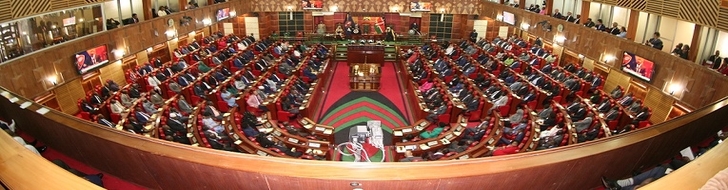
The Local Content Bill, 2025
The Local Content Bill, 2025 (the Bill) appears to have been introduced into the National Assembly on the 7th of November, 2025. Our reactions to the Bill are as follows:-
1. Constitutionality and Compliance with Kenyan Law
1.1. Article 27 – Equality and Non-Discrimination
The Bill distinguishes sharply between foreign companies and local companies, imposing obligations only on the former. Differential treatment is not automatically unconstitutional if it is:-
• Reasonable,
• Objective, and
• Justifiable in an open and democratic society.
Local content policies have been upheld in many jurisdictions when tied to legitimate public interests (industrialization, employment, national security, etc.).
Risk:
The Bill imposes heavy penalties (minimum Kes 100M + CEO imprisonment) and strict quotas (60% sourcing; 80% workforce). A court may ask whether these are proportionate and whether less restrictive means could achieve the same objective.
Assessment:
The Bill can survive Article 27 scrutiny, but the proportionality test is not guaranteed.
1.2. Article 41 – Labour Rights
The requirement that 80% of the workforce must be Kenyan citizens is consistent with Article 41 if:-
• It does not undermine fair labour practices,
• It does not lead to discriminatory hiring against qualified expatriates where necessary,
• It allows exceptions for specialized skills.
Risk:
The Bill does not provide a mechanism for exemptions where skills are unavailable locally. This may conflict with Article 41 and the right to fair labour practices for both employers and employees.
1.3. Article 40 – Protection of Property Rights
Mandatory sourcing quotas and restrictions on procurement may be challenged as:-
• Interference with business autonomy,
• Limiting the right to property (including contractual freedom).
However, Article 40(6) allows regulation in the public interest. Courts have upheld similar interventions in regulated sectors (e.g., mining, petroleum).
Assessment:
Likely defensible, but the Bill should articulate the public interest rationale more clearly in the operative clauses, not only in the memorandum
1.3. Article 94(6) – Delegation of Legislative Power
The Bill delegates significant power to the Cabinet Secretary to:-
• Expand sectors covered,
• Set standards,
• Define additional local content requirements.
The Bill attempts to comply with Article 94(6) by referencing the Statutory Instruments Act and Interpretation and General Provisions Act.
Risk:
The delegation is broad, and courts may require clearer guiding principles and parameters to avoid unconstitutional delegation.
1.5. Article 110 – Bill Concerning Counties
The memorandum states it is not a Bill concerning counties. However, the Bill touches on:-
• Agriculture (a devolved function),
• Trade development (shared),
• Local industry promotion (shared).
Risk:
A procedural challenge under Article 110(3) is possible if the Senate is excluded.
2. Compliance with International Law and Trade Obligations
2.1. WTO Rules (GATT, GATS, TRIMs)
The Bill’s mandatory local content quotas may conflict with:-
• TRIMs Agreement (prohibits local content requirements tied to investment),
• GATT Article III (national treatment),
• GATS (market access and national treatment in services).
Kenya has previously taken positions supporting local content in extractives, but WTO jurisprudence is generally hostile to mandatory local content quotas.
Assessment:
High risk of inconsistency with WTO rules, especially for:-
• Manufacturing quotas (60%),
• Agricultural sourcing requirements (100%),
• Workforce quotas (80%).
2.2. Bilateral Investment Treaties (BITs)
Kenya has BITs with several countries that guarantee:-
• Fair and equitable treatment,
• Non discrimination,
• Protection from arbitrary measures,
• Freedom to repatriate profits.
Mandatory quotas and criminal penalties may be challenged as:-
• Indirect expropriation,
• Unfair and inequitable treatment,
• Discriminatory regulation.
2.3. Regional Trade Obligations (EAC, AfCFTA)
Both frameworks emphasize:-
• Non discrimination,
• Free movement of goods and services,
• Investment liberalization.
Risk:
The Bill may violate EAC Common Market Protocol obligations, especially regarding:-
• Market access,
• National treatment,
• Restrictions on service providers from partner states.
3. Likely Economic and Policy Implications
3.1. Positive Implications
• Boost to local manufacturing and service sectors.
• Increased employment for Kenyan citizens.
• Reduced profit repatriation.
• Strengthened agricultural markets for Kenyan farmers.
• Potential development of local supply chains.
3.2. Negative or Unintended Implications
a) Reduced Foreign Direct Investment (FDI)
Mandatory quotas and criminal penalties may deter investors or cause relocation to neighbouring countries.
b) Increased Cost of Doing Business
If local suppliers cannot meet standards or capacity, companies may face:-
• Higher costs,
• Supply chain disruptions,
• Reduced competitiveness.
c) Risk of Protectionism and Rent Seeking
Local content regimes often create:-
• Gatekeeping cartels,
• Corruption in certification,
• Artificial monopolies.
d) WTO Disputes or Retaliation
Kenya may face trade disputes or retaliatory measures.
e) Skills Gap Challenges
The 80% workforce requirement may be unrealistic in specialized sectors (ICT, pharmaceuticals, engineering).
4. Areas for Improvement (Legal and Policy)
4.1. Introduce a Phased or Sector Specific Approach
Instead of blanket quotas:-
• Start with priority sectors (manufacturing, construction, logistics).
• Allow gradual increases (e.g., 30% ? 40% ? 60%).
This aligns with best practice in Nigeria, Ghana, and South Africa.
4.2. Create an Exemption Mechanism
Allow exemptions where:-
• Skills are unavailable locally,
• Goods/services do not exist locally,
• Standards cannot be met.
This protects Article 41 rights and reduces investor flight.
4.3. Replace Criminal Penalties with Administrative Sanctions
Criminalizing CEOs is excessive and may violate proportionality principles.
Better alternatives:-
• Administrative fines,
• Compliance orders,
• Suspension of licences,
• Local content plans with monitoring.
4.4. Clarify the Role of Counties
Given agriculture and trade are devolved/shared functions, the Bill should:-
• Involve county governments,
• Provide coordination mechanisms,
• Avoid Article 110 procedural challenges.
4.5. Strengthen the Regulatory Framework
The Bill should:-
• Establish a Local Content Authority or designate an existing regulator,
• Provide clear standards,
• Define monitoring and reporting mechanisms,
• Provide dispute resolution mechanisms.
4.6. Align with International Obligations
To reduce WTO/BIT exposure:-
• Use incentives rather than mandatory quotas,
• Frame requirements as performance standards,
• Allow voluntary local content plans with reporting.
5. Overall Assessment
The Bill has strong policy intentions—industrialization, job creation, agricultural development, and reducing capital flight. These are legitimate and aligned with Kenya’s Vision 2030 and Bottom Up Economic Transformation Agenda.
However:-
• Legally, it faces risks under the Constitution (Articles 27, 41, 40, 94, 110).
• Internationally, it conflicts with WTO, BITs, and regional trade commitments.
• Economically, it may produce both gains and significant unintended consequences.
• Structurally, it needs clearer regulatory architecture and proportional enforcement mechanisms.
With targeted amendments, it can become a robust, defensible, and effective local content framework.
The Bill is available on the following link, i.e., https://www.parliament.go.ke/sites/default/files/2025-11/THE%20LOCAL%20CONTENT%20BILL%2C%202025%20%28NATIONAL%20ASSEMBLY%20BILLS%20NO.%2045%29.pdf
 For new clients only, Send a Chat
Leave a comment